
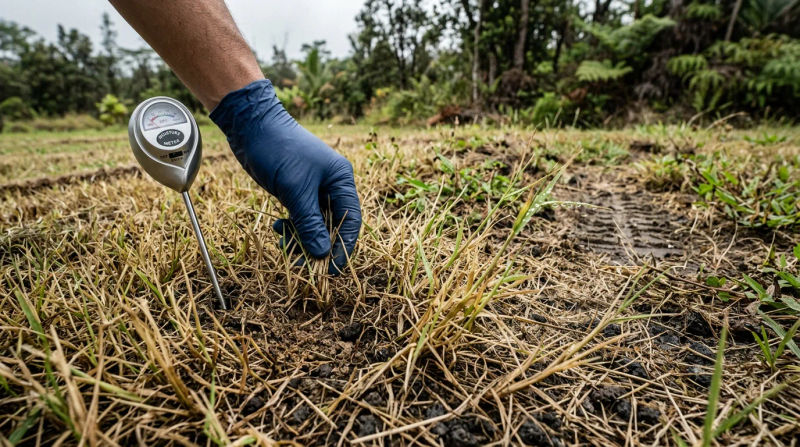
It’s a familiar feeling here in Fern Acres as we head into September. The ground is firm, the air is dry, and the risk of fire is on everyone’s mind. You do your part by keeping the yard tidy, which includes the weekly lawn mowing. You run the mower over the grass, and everything looks neat and trim. Then, the first good rain of the season finally arrives. You expect to see your lawn spring to life, lush and green. Instead, you’re greeted with disappointing, patchy areas of brown and yellow that you swear weren’t there before. What happened?
As a landscape specialist with over a decade of experience here on the windward side, I’ve seen this exact scenario play out countless times. What seems like routine maintenance can actually be causing significant damage, especially during our dry season. The combination of fast-draining volcanic soil and improper mowing techniques can set your lawn up for a struggle. Recognizing the early lawn stress signs is the key to preventing widespread damage and a lengthy recovery.
Common Signs and Symptoms
Your lawn will tell you when it’s unhappy, but the signals can be subtle at first. During the dry season, it’s easy to mistake stress for simple dormancy. Here are seven key indicators that your mowing habits might be harming your lawn:
- Distinct Brown or Yellow Patches: This is the most obvious sign. If you see Fern Acres brown lawn patches that look scorched or are circular in shape, especially on high spots or uneven ground, you’re likely looking at scalping. This is where the mower blades cut the grass too low, slicing into the crown of the plant and exposing the soil.
- Visible Soil Between Grass Blades: A healthy, dense lawn should be a thick carpet. If you can easily see the soil when looking down at your lawn, it’s a sign that the turf is too thin. This is often a direct result of consistently mowing too short, which prevents the grass from developing the full, leafy growth needed to cover the ground.
- Slow Recovery After Foot Traffic: Walk across your lawn and then look back. Do your footprints linger for more than a few minutes? Healthy, well-hydrated grass blades should spring back up relatively quickly. Stressed, dehydrated grass that has been cut too short lacks the internal turgor pressure to recover, leaving your path visible for a long time.
- Frayed or Torn Grass Tips: Take a close look at an individual blade of grass after you mow. Does it have a clean, sharp cut, or does it look torn and shredded? Dull mower blades don't slice; they rip. This ragged tearing creates a larger wound on the plant, causing it to lose more moisture and turning the tips a whitish-brown color within a day or two.
- An Invasion of Weeds: Nature abhors a vacuum. When your grass is thin and stressed, it leaves open real estate for opportunistic weeds. If you’re seeing a sudden increase in broadleaf weeds or other unwanted grasses, it’s a strong indicator that your primary turf is not healthy enough to outcompete them.
- Persistent Mower Wheel Tracks: Similar to footprints, the tracks from your mower wheels shouldn't remain for long. If you can still see the lines from your last mow several days later, it’s a clear sign the grass is under stress and lacks the resilience to bounce back from the compression.
- Dust Clouds While Mowing: While some dust is normal on dry days, excessive dust clouds indicate two things: the ground is extremely dry, and your mower is likely set too low, kicking up bare soil along with grass clippings. This is a visual cue that you are likely scalping the lawn.
What Causes This Problem
Understanding the cause of these symptoms comes down to the unique environment of Fern Acres and the biology of your grass. Our volcanic soils are fantastic for drainage - sometimes too fantastic. They don’t hold onto moisture for long, meaning the top layer can become bone-dry between our seasonal showers.
The primary culprit behind these lawn stress signs is an incorrect dry-season mowing height Fern Acres residents often use. During periods of active growth and rain, a shorter cut is more manageable. However, during the dry season, the grass is already under stress from lack of water and high heat. When you mow too low, you do two things:
- You remove too much of the blade: The grass blade is the plant’s food factory, using photosynthesis to create energy. Removing more than one-third of the blade at a time shocks the plant and severely limits its ability to feed itself.
- You expose the crown and soil: The crown, located at the base of the plant right at soil level, is the growth center. Cutting into it can kill the plant entirely. Furthermore, exposing the soil to direct sunlight heats it up, evaporates what little moisture is there, and creates a perfect environment for weed seeds to germinate.
For most lawn types in our area, raising your mower deck to 3 or even 4 inches during the dry months is a simple but powerful change. This leaves more of the blade to conduct photosynthesis, shades the soil to keep it cooler and retain moisture, and helps the grass build the deep roots it needs to survive dry spells.
Dull mower blades are another major contributor. A dull blade rips and shreds the grass, creating a jagged wound that invites disease and causes the plant to lose precious moisture. Sharpening your mower blades at least a couple of times per season is critical.
Finally, timing is everything. A common question is when to mow after rain Fern Acres homeowners should consider. Mowing when the grass is wet and the ground is saturated can lead to clumping, uneven cuts, and can compact our delicate volcanic soil. It's best to wait until the grass blades are dry to the touch and the ground has firmed up enough that the mower wheels won't sink in.
When to Call a Professional
Many minor lawn issues can be addressed with some simple adjustments. If you’ve just started noticing frayed tips or lingering footprints, your first steps should be to raise your mower deck and sharpen your blades. This might be enough to turn things around.
However, there are situations where calling in an experienced professional is the wisest course of action. You should consider getting an expert opinion if:
- You have widespread Fern Acres brown lawn patches. If more than a quarter of your lawn is showing severe stress, a simple fix might not be enough. A professional can diagnose if there are underlying issues like pests, disease, or severe soil compaction at play.
- The problem persists after you’ve made adjustments. If you’ve raised your mowing height and sharpened your blades but the lawn’s health continues to decline, it's time for a deeper look. There may be a nutrient deficiency or soil pH issue that requires a soil test and a targeted treatment plan.
- You’re unsure of the best course of action. Lawn recovery can be a science. An expert can save you time and money by correctly identifying the problem and creating an effective recovery strategy, which might include aeration, topdressing with compost, or overseeding with a more resilient grass variety suited for our climate.
- You simply don’t have the time or equipment. Proper lawn care takes time and specialized tools. If your schedule is packed, letting a qualified team handle it ensures the job is done right, protecting the investment you have in your property.
Conclusion
Your lawn is a living part of your property, and how we care for it, especially during the challenging dry season, matters immensely. Mowing isn't just about keeping things short; it's about promoting health and resilience. By paying attention to the lawn stress signs - like brown patches, thin turf, and slow recovery - you can catch problems early.
Remember the key takeaways: adjust your dry-season mowing height Fern Acres lawns need by raising your mower deck, ensure your blades are sharp for a clean cut, and be mindful of when to mow after rain Fern Acres weather patterns bring. Acting on these early warnings will prevent small issues from becoming big, costly headaches. A healthy lawn not only looks better but is also more resistant to weeds, pests, and drought.
If you notice any of these signs and aren't sure how to proceed, don't hesitate. Contact a local landscaping professional for an inspection. An expert eye can diagnose the root cause and get your lawn back on the path to green, healthy growth.