
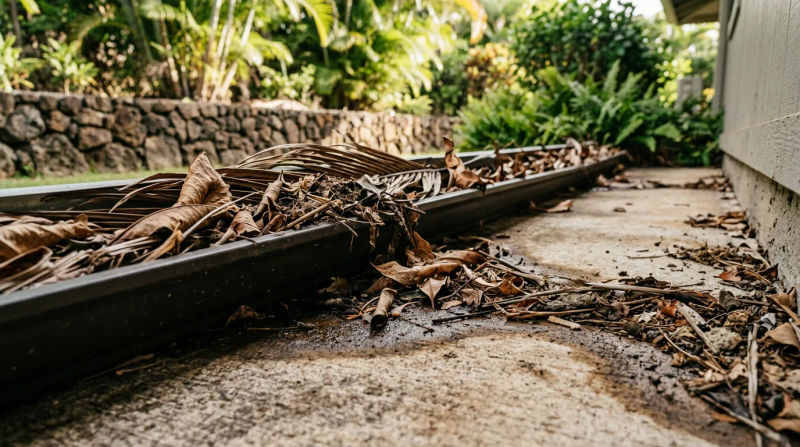
It's that time of year in Hawaiian Beaches. The sun is still shining, but there's a different feeling in the air. You walk out onto your lanai and notice the corner by the steps is filled with dry, crunchy leaves. The coastal breeze has been busy, pushing them against the foundation and along your walkways. It seems harmless now, but you remember last year - how after the first big rain, that same pile turned into a slick, heavy mat that stained the concrete and made the steps treacherous. That's the subtle signal that now is the perfect time to address leaf buildup, before our wet season arrives and turns a small cleanup job into a major headache.
As a landscape specialist who has worked on countless properties here on the windward side for over a decade, I’ve seen this exact scenario play out every year. Dealing with leaves isn't just about keeping things tidy; it's about protecting your property, ensuring safety, and preventing bigger problems down the road.
Common Signs and Symptoms
Recognizing the early leaf removal signs is the key to staying ahead of the problem. It’s easy to overlook a few scattered leaves, but when they start to accumulate, they create issues that go beyond simple aesthetics. Here’s what my team and I look for when we assess a property:
- Accumulation in Key Areas: Take a walk around your home. Are leaves piling up in corners, against your foundation, or under the eaves of your lanai? These spots are collection points where wind and rain conspire to create dense, compacted layers.
- Staining on Hardscapes: Look closely at your concrete or stone walkways. Do you see faint brown or yellow stains where leaves have been sitting? This is a sign of tannins leaching out as the leaves begin to decompose. Once these stains set in, they can be very difficult to remove.
- A Slippery Film on Paths: This is one of the most critical slippery walkway leaf debris warning signs. Even when dry, a thin layer of crushed leaf dust and early decomposition can create a surprisingly slick surface. After a light morning mist or the first rain, these walkways can become as slippery as ice.
- Gutters Clogged with Debris: Look up at your roofline. Are your gutters overflowing with leaves and other organic matter? Clogged gutters can't direct rainwater properly, leading to water overflowing and pooling right against your home's foundation, which is a significant concern for the post-and-pier homes common in our area.
- Smothered Lawn and Garden Beds: Patches of your lawn that are turning yellow or brown, especially in low spots or along the edges of your yard, may be suffering from leaf smothering. A thick layer of leaves blocks sunlight and air, killing the grass and creating a haven for pests and fungal diseases.
What Causes This Problem
Understanding why leaf litter buildup Hawaiian Beaches is such a persistent issue helps in managing it effectively. It’s not just about trees dropping their leaves; it’s a combination of our unique local environment and property layouts.
First and foremost, our persistent coastal breezes are the primary culprit. They act like a natural blower, gathering loose leaves from all over your yard and neighborhood and depositing them into sheltered corners, against fences, and around the base of your home. This is why you’ll often find the deepest piles on one side of your property.
Many homes in Hawaiian Beaches, particularly those built in the 1970s, are post-and-pier structures. This design, while excellent for airflow in our tropical climate, creates a unique challenge. The open space underneath the house becomes a wind tunnel, trapping leaves and debris in hard-to-reach places. These piles can hold moisture against the posts and undercarriage of your home, inviting pests and rot.
The simple, functional hip or gable roofs on these homes are great for shedding heavy rain, but they also direct leaves and water into concentrated areas. If your home uses a rainwater catchment system, this leaf debris can quickly clog pre-filters and contaminate your water supply if not managed properly.
The real problem begins when moisture is introduced. We're all thinking about when to schedule leaf removal before rain season, and the answer is right now. Dry, fluffy leaves are lightweight and relatively easy to blow or rake. But once the first significant rains arrive, that pile transforms. It becomes a heavy, soggy, compacted mat. This mat smothers everything beneath it, accelerates staining on your walkways, and is substantially more difficult and messy to remove.
When to Call a Professional
Deciding whether to tackle leaf removal yourself or to call for help often comes down to scale, safety, and timing.
A DIY Approach Might Work If:
- You have a small, relatively flat yard with only a few trees.
- The leaf buildup is still light, dry, and easy to manage with a rake or leaf blower.
- You are physically able to handle the work, which can be more strenuous than it looks.
- You have the time to complete the job before the weather turns.
Consider Calling a Professional When:
- The Scale is Large: If you have a large property or numerous mature trees, the volume of leaves can quickly become overwhelming. Experienced professionals have the high-powered equipment to clear large areas efficiently.
- Safety is a Concern: If you’re already seeing slippery walkway leaf debris warning signs, it’s best to let a professional handle it. The same goes for cleaning gutters, which involves working on a ladder and is best left to those with the right safety gear and experience.
- The Terrain is Challenging: Many properties in our area are built on uneven lava terrain. Navigating this with wheelbarrows or heavy equipment can be difficult and risky.
- The Buildup is Already Wet and Compacted: If you've missed the dry window and are now dealing with heavy, matted leaves, the job becomes significantly harder. A professional team can handle this heavy, messy work quickly.
- You Have a Catchment System: Ensuring that the area around your roof and your gutters are completely clear is crucial for maintaining water quality. An experienced crew understands how to clear this debris without contaminating your system.
My team and I often get calls in late October or November, after the first few downpours. By then, the job is twice as hard, and the homeowner is already dealing with slick paths and muddy messes. Scheduling a cleanup in September is a proactive step that saves you stress and potential hazards later.
Conclusion
Living in Hawaiian Beaches means embracing our beautiful, lush environment, and that includes managing the natural cycle of falling leaves. What starts as a few leaves blowing in the breeze can quickly escalate into a slick, hazardous, and damaging problem once the rainy season begins. By looking for the common leaf removal signs - piles in corners, stained concrete, and clogged gutters - you can get ahead of the issue.
Remember that the combination of our coastal winds and unique home architecture creates perfect traps for leaf litter. The key is to act while the leaves are still dry and light. Don't wait for the problem to become heavy and waterlogged. Taking care of it now protects your property's value, ensures your family's safety, and makes seasonal maintenance far less of a chore.
If you notice any of these signs, contact a local landscaping professional for an inspection. They can help you clear the current buildup and offer solutions for managing it throughout the year.